Dr. Aniruddha's Advance Ortho And Polyclinic | Dr. Aniruddha Deshmukh
Best Sports Rehabilitation Guidance in Pune: Restoring Strength, Confidence, and Performance
Effective sports rehabilitation goes far beyond basic physical therapy; it focuses on restoring movement efficiency, reducing injury recurrence, and enabling athletes — whether weekend warriors or professionals — to perform at their best. As activity demands increase and injuries accumulate over time, structured rehabilitation becomes essential rather than optional. Consequently, individuals in Pune increasingly seek out expert programs that integrate cutting-edge techniques with personalized progression plans. In this evolving landscape, the best sports rehabilitation guidance in Pune emphasizes tailored protocols, movement analysis, and long-term performance goals rather than generic exercise templates.
At Dr. Aniruddha’s Advance Ortho And Polyclinic, sports rehabilitation is not treated as an afterthought to injury treatment but as a central pillar of athletic care. Dr. Aniruddha Deshmukh combines detailed injury assessment with movement mechanics evaluation to create individualized rehabilitation pathways. Instead of focusing solely on pain reduction, this approach prioritizes neuromuscular control, coordinated strength development, and biomechanical efficiency. As a result, athletes regain not only comfort but also confidence and capability across daily tasks, competitive training, and return-to-sport progression.
What Makes the Best Sports Rehabilitation Guidance in Pune Stand Out
The best sports rehabilitation guidance in Pune does not rely on one-size-fits-all solutions. Instead, it begins with a comprehensive evaluation that explores movement patterns, strength imbalances, and injury history. Because athletes present varied demands — whether running, jumping, or rapid change-of-direction activities — rehabilitation must adapt to specific performance goals. Moreover, structured progression ensures that return-to-activity decisions are based on measurable milestones rather than arbitrary timelines.
Furthermore, high-quality rehabilitation integrates proprioceptive training, flexibility enhancement, and sport-specific conditioning. These elements reduce compensation patterns that often lead to secondary injuries and help athletes maintain resilience under load. When combined with guidance on recovery strategies such as sleep optimization, load management, and nutrition awareness, rehabilitation becomes a holistic performance tool rather than just a recovery modality. This comprehensive focus sharpens outcomes and distinguishes the most effective programs in Pune.
Advanced Rehabilitation Strategies by Dr. Aniruddha Deshmukh
At Dr. Aniruddha’s Advance Ortho And Polyclinic, sports rehabilitation is approached as an individualized performance plan rather than a routine set of exercises. Dr. Aniruddha Deshmukh specializes in evaluating both the injury itself and the functional demands of the athlete’s sport or daily routine. This ensures that rehabilitation aligns not only with healing but also with performance expectations. Consequently, athletes receive guidance that supports a safe and efficient return to activity.
Moreover, Dr. Deshmukh integrates evidence-based techniques such as movement re-education, dynamic stability training, and progressive strength conditioning. Because these methods rebuild coordination rather than isolated strength, athletes often recover more sustainably and with reduced risk for recurrence. This targeted approach reflects why many patients consider this clinic among the best for sports rehabilitation guidance in Pune.
Common Sports Injuries and Rehabilitation Focus Areas
Sports injuries come in many forms, but several patterns commonly disrupt performance and require focused rehabilitation. For example, ligament sprains — particularly in the knee and ankle — often lead to instability and proprioceptive deficits. Without targeted neuromuscular training, athletes remain at heightened risk for re-injury even after the pain subsides. Similarly, tendinopathies such as Achilles or patellar tendinosis involve both mechanical stress and tissue response patterns that require graded loading strategies rather than passive care alone.
Additionally, muscle strains, low back dysfunction related to athletic activity, and repetitive shoulder stress in overhead sports call for rehabilitation that integrates flexibility, stability, and sport-specific movement rehearsal. Because these issues affect performance quality as much as comfort, the best programs in Pune focus on restoring complete motion control and functional strength rather than simply alleviating symptoms. This holistic emphasis ultimately empowers athletes to return stronger and more resilient than before.
Phased Sports Rehabilitation: From Acute Care to Performance Return
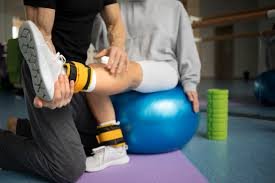
Good rehabilitation moves through predictable phases rather than stopping abruptly once pain lessens. Initially, acute phases focus on pain control, joint mobility, and safe foundational movement. Subsequently, intermediate phases emphasize strength development, dynamic control, and correction of compensatory movement patterns. Finally, advanced phases incorporate sport-specific drills, agility training, and load management practices that closely mimic real-world demands.
In each phase, measurable criteria guide progression, helping minimize guesswork and reduce re-injury risk. At Dr. Aniruddha’s Advance Ortho And Polyclinic, this structured progression enhances clarity, confidence, and performance outcomes. Rather than arbitrary timelines, athletes progress based on functional readiness, which supports safer and more satisfying returns to sport or activity.
Integrating Rehabilitation with Injury Prevention
Effective sports rehabilitation does not end when pain resolves; instead, it provides long-term strategies to prevent recurrence. This includes strengthening underloaded muscle groups, correcting movement deficiencies, and educating athletes about appropriate training volumes. Additionally, balance training, proprioceptive drills, and core stability work improve integrated movement control under load — a critical factor for injury prevention.
Because every athlete’s biomechanics and sport demands differ, customization remains essential. For example, runners may need targeted hip and core conditioning to reduce knee stress, while overhead athletes benefit from coordinated shoulder-scapular strength and stability training. These tailored strategies help maintain performance milestones while protecting vulnerable structures over time.
Role of Technology and Movement Analysis in Sports Rehabilitation
Psychological Support in Sports Rehabilitation
Frequently Asked Questions (FAQs)
What makes sports rehabilitation different from general physical therapy?
Sports rehabilitation integrates performance goals, movement mechanics analysis, and sport-specific progression rather than generic strengthening.
How soon after injury should rehabilitation begin?
Early assessment supports faster progression, though timing depends on injury severity and clinical stability.
Can rehabilitation prevent future sports injuries?
Yes, targeted training reduces compensation patterns and restores integrated movement control, which lowers recurrence risk.
Is rehabilitation only for athletes?
No — anyone with activity-related pain, recurrent discomfort, or movement inefficiency can benefit from structured sports rehabilitation.
How long does a typical rehabilitation program take?
Duration varies with injury complexity and functional goals but generally progresses through measurable stages rather than fixed timelines.