A knee arthroscopy surgeon is an orthopaedic surgeon who uses a camera and narrow instruments to diagnose and treat selected problems inside the knee through small incisions. Understanding the technique, its limits, and the questions to ask will help you decide whether you need arthroscopy, another form of treatment, or a different specialist.
Key takeaways
- Arthroscopy uses a camera to diagnose and treat selected knee problems.
- Meniscus tears, loose cartilage, and some ligament injuries may suit arthroscopy.
- Ask about the surgeon’s arthroscopy experience, diagnosis, risks, and rehabilitation plan.
- Arrange transport home and follow the prescribed exercises after surgery.
What does a knee arthroscopy surgeon do?
A knee arthroscopy surgeon is an orthopaedic surgeon with focused training or substantial practice in treating knee problems through arthroscopy. This knee arthroscopy surgeon definition describes a practice focus, not a separate basic medical degree.
Arthroscopy is a surgical technique, and it does not replace the full range of orthopaedic care, including fracture treatment, joint replacement, and non-surgical treatment.
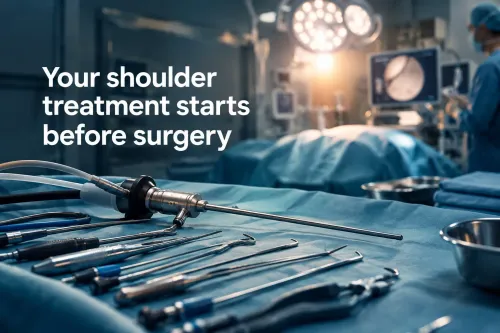
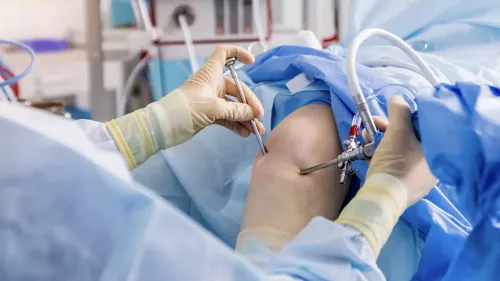
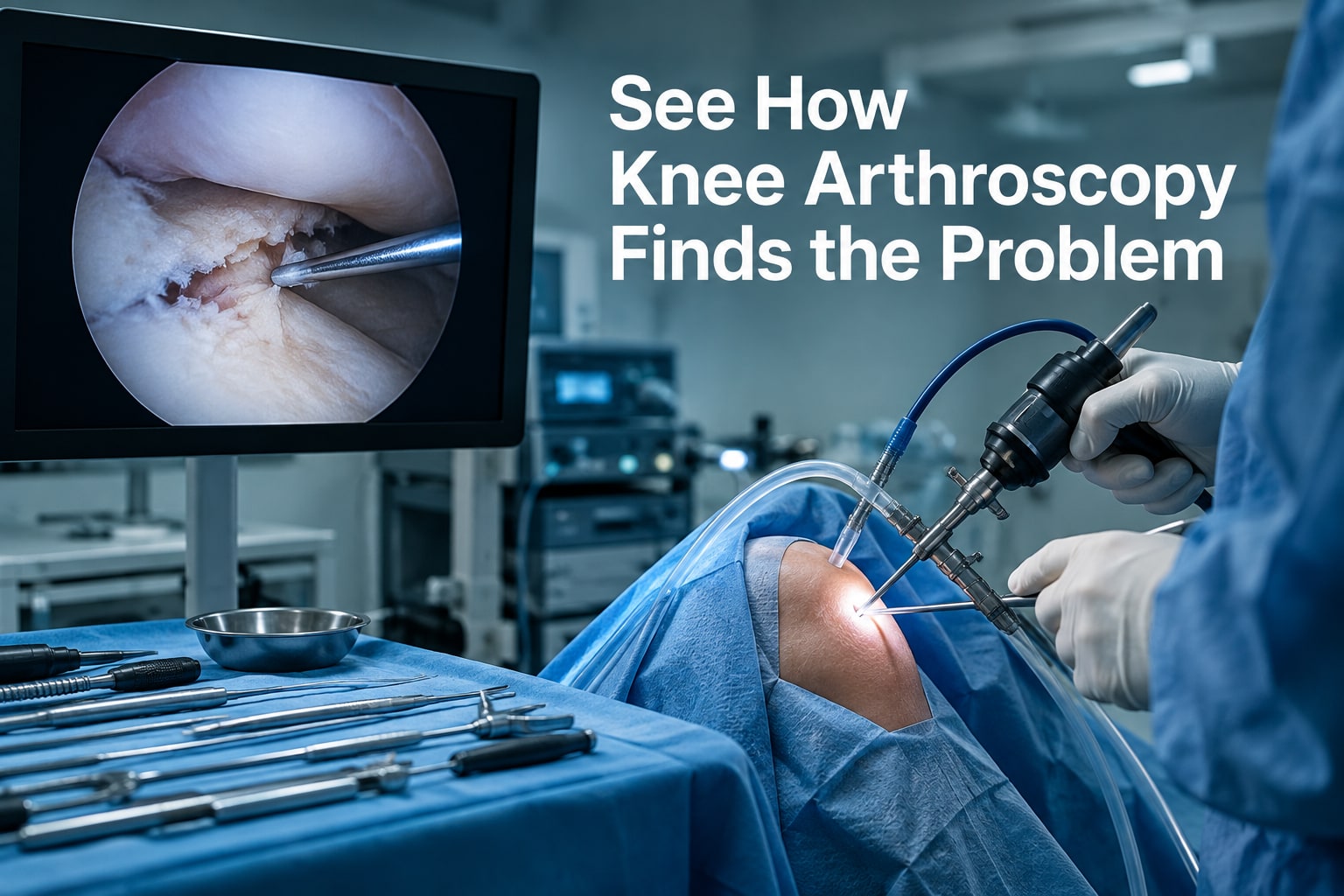
Through small incisions around the knee, the surgeon inserts an arthroscope camera with a light. The camera sends magnified images of the joint to a monitor, allowing inspection without opening the knee widely. Sterile saline irrigation flows through the joint to expand the working space and wash away blood and debris.
Additional small incisions, called portals, allow the surgeon to pass instruments into the joint, such as:
- Scissors for cutting damaged tissue
- Shavers for removing or smoothing tissue
- Graspers for holding loose or torn tissue
- Suturing devices for repairing structures such as a meniscus
- Drills for selected bone or cartilage procedures
The surgeon may use arthroscopy to investigate a suspected problem, treat it during the same procedure, or do both. Your symptoms, examination, X-rays, MRI findings, activity needs, and response to non-surgical care still determine whether arthroscopy is appropriate; an MRI report alone does not decide the operation.
How knee arthroscopy diagnoses and treats a problem
Arthroscopy can diagnose a knee problem, treat it, or do both in one operation. During diagnostic knee arthroscopy, the surgeon inspects the menisci, cartilage, cruciate ligaments, synovial lining, kneecap surface, and other joint structures when examination and imaging have not answered the clinical question.
- The surgeon makes small portals around the knee and inserts the arthroscope to view the joint on a monitor.
- If the cause is visible, instruments passed through additional portals can remove loose bodies, trim unstable meniscal tissue, perform selected cartilage procedures, or remove inflamed synovium through synovectomy.
- The same access can support meniscus repair or assist with ligament surgery. ACL reconstruction arthroscopy is a planned ligament procedure, not simply an inspection of an ACL tear.
Meniscus repair preserves viable tissue when the tear pattern and blood supply give it a realistic chance to heal. Partial meniscectomy removes the unstable torn portion and may allow faster early recovery, but it removes load-sharing tissue and can contribute to later degeneration.
The choice depends on the tear’s pattern, blood supply, symptoms, and associated injuries.
A surgeon may inspect a joint and find that no treatment is appropriate. Arthroscopy cannot restore substantially worn joint cartilage, so pain caused by advanced arthritis may require exercise, medication, injections, osteotomy, or partial or total knee replacement instead.
Which knee problems are suitable for arthroscopy?
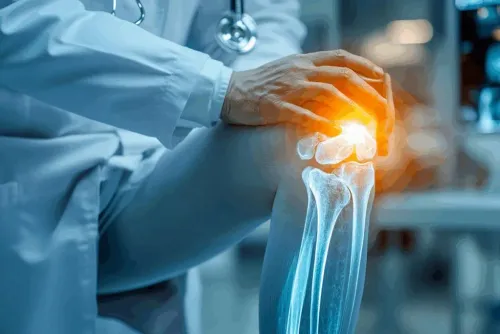
Arthroscopy suits a specific mechanical problem, not every painful knee. A surgeon may consider it for a symptomatic meniscus tear, a loose body causing catching or true locking, selected cartilage damage, persistent synovitis, an ACL injury with functional instability, or selected kneecap and patellar-tracking problems.
Pain from loose bodies in the knee joint can improve when the obstruction is removed.
Suitability depends on the actual lesion, not the MRI label alone. The assessment combines your symptom history, duration of pain, work or activity demands, examination, X-rays, MRI findings, instability, true locking, and response to physiotherapy, medication, injections, or activity modification. Meniscus tear arthroscopy is not automatically appropriate simply because an MRI shows a tear.
| Knee problem | When arthroscopy may fit | When another approach may fit better |
|---|---|---|
| Meniscus tear | Unstable tissue causes pain, catching, or locking | Stable or degenerative tears responding to rehabilitation |
| ACL injury | Repeated giving-way affects work or pivoting sport | Structured rehabilitation and activity modification |
| Cartilage damage | A focal defect causes mechanical symptoms | Widespread cartilage loss and narrowed joint space |
| Osteoarthritis | A separate loose body causes true locking | Exercise, weight management, medication, injections, osteotomy, or replacement |
Arthroscopy does not restore substantially worn cartilage. Routine washout or debridement does not reliably improve arthritis pain or function, so ask: “What specific mechanical problem will this operation correct?” Some ACL injuries also improve without reconstruction.
What should you expect before and after the operation?
Before you sign consent, ask for the exact diagnosis, the proposed procedure, the non-surgical alternative, and the likely result without surgery. A day-care knee surgery still involves an invasive operation, even when you return home the same day.
- Ask which lesion the surgeon will treat and what happens if the operation is postponed or declined.
- Ask about knee arthroscopy risks: infection, bleeding, blood clots, nerve or blood-vessel injury, stiffness, persistent pain, no improvement, and further surgery.
- Confirm the anaesthesia arrangements, fasting instructions, and which medicines to stop or continue.
- Arrange transport home and ask who to contact after discharge. Get written warning signs, including fever, increasing wound redness or drainage, severe calf swelling, chest pain, breathlessness, or uncontrolled pain.
Recovery depends on what the surgeon performs. Inspection or partial meniscectomy often follows different weight-bearing and rehabilitation rules from meniscus repair or ACL reconstruction. Ask how long you will need crutches or restricted weight-bearing, when knee bending can begin, and who will supervise your knee arthroscopy rehabilitation.
ACL reconstruction is not a quick return-to-sport procedure. Returning to pivoting sport depends on restored strength, movement control, knee stability, and functional testing, not a calendar date alone. Ask for the testing criteria and the rehabilitation milestones before surgery.
How should you choose a knee arthroscopy surgeon in Pune?
Choosing a knee arthroscopy surgeon in Pune starts with the knee problem, not the word “arthroscopy.” Ask whether the doctor regularly performs the procedure you may need: meniscus repair, partial meniscectomy, ACL reconstruction, cartilage treatment, synovectomy, or loose-body removal. That is more useful than a broad claim of knee surgeon experience.
| Check | What to ask | Why it matters |
|---|---|---|
| Doctor’s credentials | What is the primary orthopaedic qualification, and where is the doctor listed in the official medical register? | “Orthopaedic registration India” helps verify professional status rather than relying on an online title. |
| Diagnosis | Which examination findings, X-rays, and MRI findings establish the lesion? | An MRI report alone does not prove that surgery will improve your symptoms. |
| Alternatives | What would you recommend if I declined surgery? | A credible plan may include physiotherapy, medication, injections, or activity modification. |
| Hospital | What are the hospital facilities for arthroscopy, including the operating room, emergency backup, anaesthesia, infection control, and physiotherapy? | Weak arrangements can complicate recovery or urgent care. |
| Follow-up | Who handles complications, persistent symptoms, or possible reoperation, and when are follow-ups scheduled? | You need a clear plan beyond the operation date. |
If trauma caused a fracture, ask about the exact fracture pattern and fixation method. A doctor may evaluate, immobilise, reduce, or refer the injury, while definitive fracture fixation differs technically from elective arthroscopy.
When discussing care with Dr Aniruddha Deshmukh-Orthopedic Doctor, Joint Replacement & Arthroscopy Surgeon in Hinjewadi, Pune, use these questions to test whether the proposed operation fits your symptoms, examination, imaging, and activity goals.
Related services
Arthroscopy Surgeon Arthroscopy Surgeon in Punawale, Pune Dr. Aniruddha Deshmukh – Leading Arthroscopy Surgeon in Punawale and Pune. Dr. |
Arthroscopy Surgeon Arthroscopy Surgeon in Mahalunge, Pune Dr. Aniruddha Deshmukh – Leading Arthroscopy Surgeon in Mahalunge, Sus, Pashan and Pune. Dr. |
Frequently asked questions
What does a knee arthroscopy surgeon do?
A knee arthroscopy surgeon diagnoses and treats selected knee problems using a small camera and specialised instruments inserted through small incisions. The surgeon also determines when arthroscopy is unsuitable and recommends another treatment.
How does knee arthroscopy diagnose and treat a problem?
The surgeon inserts an arthroscope into the knee joint to view the meniscus, cartilage, ligaments, and joint surfaces. Through additional small incisions, the surgeon can repair or remove damaged tissue, smooth selected cartilage injuries, or treat other findings identified during the procedure.
Which knee problems are suitable for arthroscopy?
Arthroscopy may suit a meniscus tear, loose body, selected cartilage injury, inflamed joint lining, or certain ligament-related problems. Your examination and imaging determine whether surgery is appropriate.
What should you expect before and after knee arthroscopy?
Before surgery, expect a clinical examination, imaging review, medication and anaesthesia instructions, and a discussion of risks and rehabilitation. After surgery, use the prescribed pain relief, wound care, weight-bearing instructions, and physiotherapy plan.
How should you choose a knee arthroscopy surgeon in Pune?
Check the surgeon’s orthopaedic qualifications, experience with your specific knee condition, explanation of alternatives and risks, hospital facilities, and follow-up and physiotherapy arrangements.
Related services
Arthroscopy Surgeon Arthroscopy Surgeon in Pimple Saudagar, Pune Dr. Aniruddha Deshmukh – Leading Arthroscopy Surgeon in Pimple Saudagar, Pimple Gurav, Rahatani and Pune. Dr. |
Arthroscopy Surgeon Arthroscopy Surgeon in Baner, Balewadi, Pune Dr. Aniruddha Deshmukh – Leading Arthroscopy Surgeon in Baner, Balewadi, and Pune. Dr. View service → |
Arthroscopy Surgeon Arthroscopy Surgeon in Hinjewadi, Pune Dr. Aniruddha Deshmukh – Leading Arthroscopy Surgeon in Hinjewadi, Marunji and Pune. Dr. |
Knee Replacement Surgeon Knee Replacement Surgeon in Punawale, Pune Dr. Aniruddha Deshmukh – Leading Knee Replacement Surgeon in Punawale and Pune. Dr. View service → |