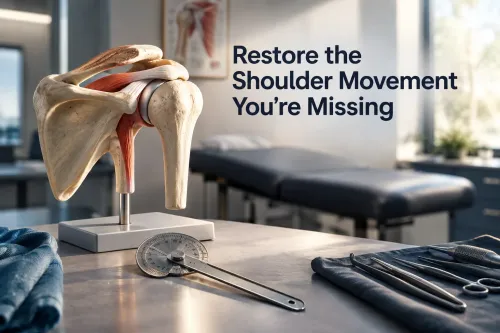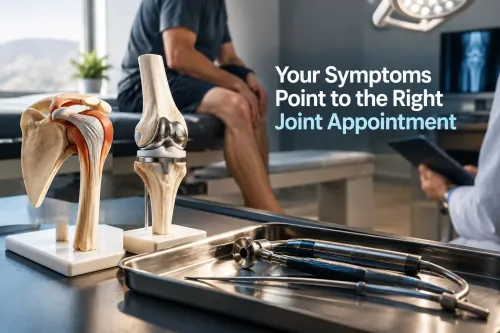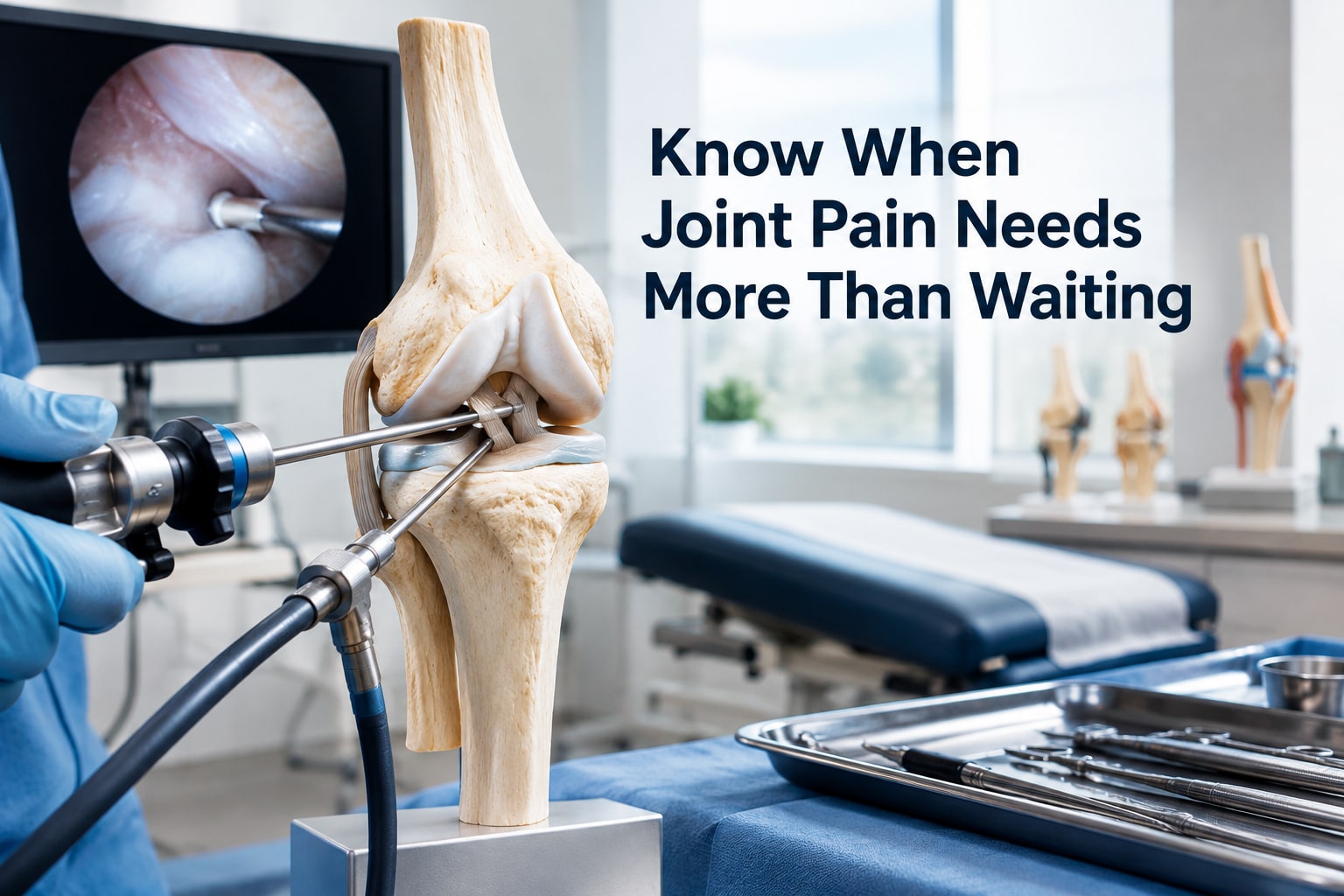
Knee locking, shoulder instability, repeated swelling and pain that continues after physiotherapy do not automatically mean you need arthroscopy. By the end, you will know when to seek urgent care, how to arrange an orthopedic appointment in Mahalunge, what to bring, and how to judge surgery against non-surgical options.
Key takeaways
- Seek emergency care for a deformed joint, loss of sensation, or inability to bear weight.
- Bring scans, treatment records, medicines, and a clear timeline of your symptoms.
- Confirm the suspected injury before comparing arthroscopy with physiotherapy or observation.
- Ask what the procedure can repair, its limits, and the expected recovery milestones.
When arthroscopy symptoms need an appointment—and when they need emergency care
Persistent knee locking, shoulder instability, repeated joint swelling, or pain that continues after physiotherapy justify an orthopedic consultation. These arthroscopy symptoms need a diagnosis first: a meniscal tear, ligament injury, cartilage lesion, loose body, or another condition may require completely different treatment.
Clicking alone does not prove a surgically treatable tear. A genuinely locked knee cannot fully extend because something inside the joint blocks movement; arrange urgent orthopedic assessment rather than waiting several weeks for a routine slot.
| Situation | What to do | Why it matters |
|---|---|---|
| Ongoing pain, repeated swelling, sports injury, or shoulder instability | Book an orthopedic consultation | Examination and imaging can identify the cause and whether surgery is appropriate |
| True knee locking or rapidly worsening swelling without systemic illness | Seek urgent orthopedic assessment | A displaced meniscal fragment or loose body may block the joint |
| New injury with inability to bear weight, obvious deformity, open wound, or severe pain | Go to an emergency department | Fracture, dislocation, or significant tissue damage needs prompt treatment |
| Cold, pale, numb, or weak limb | Seek emergency care immediately | Blood-flow or nerve compromise can permanently damage the limb |
| Hot, swollen joint with fever or feeling very unwell | Go to emergency care | Septic arthritis requires prompt assessment and joint-fluid testing |
Do not book suspected infection as routine “arthritis.” Emergency assessment takes priority over an elective arthroscopy discussion.
How to book an arthroscopy consultation in Mahalunge and prepare for it
Confirm the appointment details before travelling: a booking error can send you to the wrong clinic or leave you waiting outside appointment hours. When arranging an arthroscopy appointment Mahalunge, ask whether the visit is with the surgeon, whether walk-ins are accepted, how far ahead to schedule, and what the consultation fee is.
- Use the clinic’s current phone number or online booking channel. Confirm the clinic address, appointment hours, parking or access instructions, and whether you need a referral.
- Tell the coordinator which joint is affected, when symptoms began, whether an injury caused them, and whether you have locking, instability, swelling or restricted movement. Mention previous physiotherapy, injections or medicines.
- Bring printed reports and the actual images or digital files for previous X-rays, MRI or CT scans. A report without the images can limit the surgeon’s assessment.
- Carry a list of prescription medicines, over-the-counter drugs, supplements and allergies. Include previous operations and important medical conditions.
- Write down your main symptoms, their frequency, pain triggers and effect on work, sport, sleep and walking. Ask which procedure is being considered, whether it is diagnostic or therapeutic, expected improvement, driving and work restrictions, rehabilitation, risks, alternatives and the plan if symptoms continue.
Dr Aniruddha Deshmukh-Orthopedic Doctor, Joint Replacement & Arthroscopy Surgeon in Hinjewadi, Pune can be contacted through the clinic’s current booking channel; verify the exact clinic address and appointment hours when scheduling.
Do not wait for a routine orthopedic doctor appointment if the joint is hot and swollen with fever, visibly deformed, openly injured, suddenly and severely swollen, or the limb is cold, numb or impossible to bear weight on. Seek urgent assessment instead.
Related services
Orthopedic Doctor Orthopedic Doctor in Mahalunge, Pune Dr. Aniruddha Deshmukh is a leading and experienced Orthopedic Doctor and Orthopedic Specialist in Mahalunge, Sus, Pashan and Pune, with over 14... |
Arthroscopy Surgeon Arthroscopy Surgeon in Mahalunge, Pune Dr. Aniruddha Deshmukh – Leading Arthroscopy Surgeon in Mahalunge, Sus, Pashan and Pune. Dr. |
What the orthopedic doctor checks before recommending arthroscopy
An arthroscopy diagnosis is not a diagnosis by itself; the consultation must identify the tissue causing your symptoms. The doctor asks how the injury happened, where pain occurs, whether swelling or locking follows activity, and how symptoms affect walking, work or sleep. The examination then compares both joints for tenderness, movement and strength.
- Check joint stability tests for abnormal movement suggesting an anterior cruciate ligament, shoulder-labrum or other ligament injury.
- Assess whether the joint fully bends and straightens. A genuinely locked knee can indicate a displaced meniscus fragment or loose body; clicking alone does not prove a meniscus tear requiring surgery.
- Review standing X-rays for arthritis, alignment, fracture or joint-space loss. A knee MRI review can show a meniscus tear, cartilage lesion, ligament injury or loose body, but an MRI finding alone does not justify arthroscopy.
- Compare the scan with your symptoms, age, injury mechanism, examination and response to physiotherapy or medication. This separates an incidental degenerative tear from a treatable mechanical problem.
- Confirm the proposed operation: diagnostic inspection, meniscus repair, partial meniscectomy, ligament reconstruction or another procedure. Ask what improvement is realistic and what happens if symptoms continue.
Before elective surgery, the doctor also reviews smoking, diabetes control, obesity, anaemia, skin or dental infection, allergies and anticoagulants. Do not stop medication without instructions. Clarify driving, work restrictions, rehabilitation, complications and the tissue that will be treated; recovery depends on that detail, not the word “arthroscopy.”
How to compare arthroscopy with physiotherapy, medicines and observation
An MRI finding is not an automatic reason for surgery. A degenerative meniscus tear can be an incidental age-related finding, so the decision must match your examination, pain pattern, injury mechanism, radiographs, age and response to non-surgical care.
| Option | Better first choice when | What changes the decision |
|---|---|---|
| Physiotherapy | Strength, movement and stability can improve without mechanical obstruction; use physiotherapy after sports injury to rebuild function | Persistent locking, instability or failure to progress may justify review |
| Medicines and activity modification | Pain comes from inflammation, overload or mild soft-tissue injury | Continued swelling, weakness or restricted movement despite a planned trial |
| Observation | Symptoms are mild, improving and do not limit sleep, work or movement | Worsening pain, repeated swelling or a locked joint needs reassessment |
| Arthroscopy | A loose body, repairable meniscal tear or treatable cartilage problem causes mechanical symptoms | It remains an operation with infection, clots, bleeding, anaesthetic and persistent-pain risks |
Arthroscopy is a technique, not a diagnosis. It becomes more useful when a joint repeatedly locks, a loose fragment blocks movement, or a repairable injury causes ongoing symptoms after structured treatment; it is rarely the default for knee osteoarthritis or a degenerative meniscus tear.
For an ACL injury, instability, activity goals, associated damage and rehabilitation progress matter more than the MRI alone, and prehabilitation often restores motion and strength before reconstruction.
Ask what exact procedure is proposed, whether it is diagnostic or therapeutic, the expected improvement, rehabilitation demands and the plan if you defer surgery. These arthroscopy alternatives can spare you an operation when symptoms are likely to improve without it.
What arthroscopy can repair, what it cannot fix, and what recovery involves
Arthroscopy can repair or remove selected problems inside a joint, including a torn meniscus, damaged ligament, loose body, inflamed tissue, or certain cartilage injuries. It is a technique, not a diagnosis: an MRI tear alone does not prove that surgery will help. Examination, symptom pattern, X-rays, injury mechanism, and response to treatment still matter.
| Procedure | What it may address | What it will not usually fix |
|---|---|---|
| Knee arthroscopy | Meniscus tears, loose bodies, selected ligament or cartilage injuries | Pain mainly from osteoarthritis or degenerative changes |
| Shoulder arthroscopy | Rotator-cuff tears, labral tears, instability, bursitis, impingement | Advanced arthritis or weakness from an irreparable tendon |
| Ankle, hip, wrist and elbow arthroscopy | Loose bodies, cartilage damage, selected ligament or synovial problems | Many fractures, severe joint destruction, or conditions outside the joint |
Ask which tissue will be treated and whether physiotherapy, medication, injections, observation, joint replacement, or fracture care is better. A septic joint needs urgent assessment; arthroscopic washout is only one part of its treatment.
Arthroscopy recovery time depends on the procedure: partial meniscus removal is usually quicker than meniscal repair, ligament reconstruction, cartilage restoration, or combined surgery. Ask:
- When can you bear weight, drive, work, exercise, or return to sport?
- Will you need crutches, a brace, or supervised physiotherapy?
- What are the risks of infection, clots, bleeding, nerve or blood-vessel injury, anaesthesia, persistent pain, or unexplained symptoms?
- What happens if you delay surgery?
Discuss smoking, diabetes, anaemia, infections, obesity, and blood-thinning medicines before elective surgery; change medication only with your clinician.
Frequently asked questions
When do arthroscopy symptoms require emergency care?
Seek urgent care for a deformed joint, inability to bear weight, loss of sensation, a hot swollen joint with fever, or sudden severe pain after an injury.
How should you prepare for an arthroscopy consultation in Mahalunge?
Bring imaging reports and scan discs, previous treatment records, a medicine list, allergy details, and a timeline describing pain, swelling, locking, or instability.
What does an orthopedic doctor check before recommending arthroscopy?
The doctor reviews your symptoms and injury history, examines joint movement and stability, checks strength and swelling, and studies imaging before identifying the likely cause.
How does arthroscopy compare with physiotherapy, medicines, and observation?
The choice depends on the diagnosed problem, its severity, failed conservative treatment, joint function, and whether a repairable structural injury is present.